
"forest green"
2000 article(s) found

Introduction to coffee flavor of Sumatra Lindongla Sunawahanna Manor with strong flavor
Sumatra has an equatorial crossing and belongs to a tropical rain forest climate (high temperature and rainy throughout the year, with obvious dry and wet seasons [1]). Due to the high temperature and rainy all the year round, there is little temperature difference in different places, but there are obvious differences in rainfall. The annual precipitation along the west coast is 3000 mm. The geographical location of Sumatra Island is Sumatra. The mountain area can reach 4500-6000 mm. The annual precipitation from the eastern slope of the mountains to the coastal plain 2.

Introduction to the Coffee Flavor producing area of Cedar Motede Manor in Ethiopia
Ethiopia is rectangular, with a ratio of length to width of 3:2. From top to bottom, it is composed of green, yellow and red parallel equal horizontal rectangles, with the national emblem in the middle of the flag. Since the end of the 19th century, Ethiopia began to use the green, yellow and red cross-striped national flag. In modern history, Ethiopia is the first African country to join the forest of free nations. [8] to this century
Rose Summer Coffee Bean Story Panama Ethiopia Rose Summer Coffee Bean Hand brewed Flavor Characteristics Description Difference
A very rare wild variety originating in Ethiopia, the bean probably derives its name from the coffee bean found near the local village of Guixia; the coffee tree is tall, has slender leaves, is resistant to coffee rust, and has widely spaced branches on the trunk. Green beans are slender in appearance, ripe beans have strong
Introduction of boutique coffee beans Ethiopian coffee
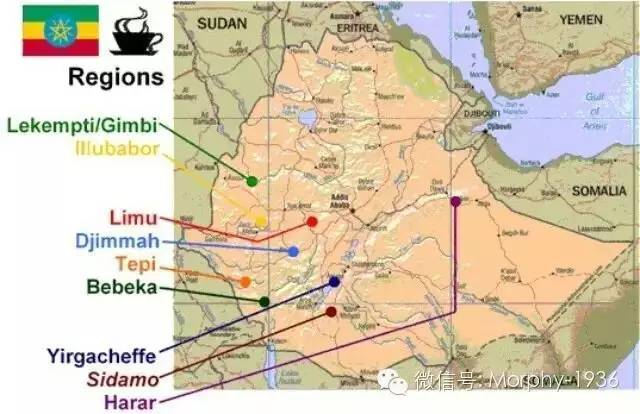
Ethiopia is the hometown of Arabica coffee, and it is in the forests of Kaffa that you can see wild Arabica coffee. In Ethiopian, coffee is called Bun or Buna, and coffee beans (coffeebean) may be translated from Kaffa Bun. Arabica coffee was discovered early in the Harald area, probably from Kafa.

A brief introduction to the market price of Sidamo Shakiso boutique coffee beans with lively and sour taste
Antigua coffee can be traced back to the Mayan civilization. Due to the eruption of the volcano, the soil here is more nutritious, and the sufficient sunlight and moisture also make the coffee produced excellent quality. Most importantly, the residents here insist on growing Arabica bourbon coffee, although the yield is small, but the texture is better. Because the residents of Antigua grow coffee in a large area,

Leaping slightly sour Lindong Coffee Flavor Manor in Sumatra, Indonesia
Sumatra has a population of about 37 million and has a low population density (85 per capita). Densely populated areas include North Sumatra and the Central Highlands of West Sumatra, with the largest urban areas concentrated in Jugang and Medan. Local residents speak 52 different languages, all of which belong to the South Island language family and are culturally similar. In the east, the most common language is Malay, but not in other areas

A brief introduction to the treatment method of grinding degree and baking degree of Sidamo Shakiso boutique coffee beans with endless aftertaste
Production area: Sidamo varieties: Native Arabica treatment: washing flavor: moderate sweet and sour sun berry aroma, citrus aroma, slightly fermented fruit aroma, fruit wine flavor. Palate: comfortable and interesting sour fruit, good sweetness and low thickness. Baking degree: medium baking area: Sidamo variety: Native Arabica treatment: high washing in western Ethiopia

What is the meaning of bidding for COE coffee beans, rose summer red bid and rose summer village red bid?
Professional coffee knowledge exchange more coffee bean consultation Please pay attention to the coffee workshop (Wechat official account cafe_style) Rose summer coffee beans have an extraordinary legend, famous for Panamanian jade estate, after winning the championship in 2004, rapid development, now more and more producing areas begin to grow rose varieties. Qianjie Coffee thinks that the impression of Rosa Coffee is the Panamanian Emerald Manor, so

Flavor characteristics of Ethiopian Fine Coffee Ethiopian Coffee
Ethiopia is the hometown of Arabica coffee, and it is in the forests of Kaffa that you can see wild Arabica coffee. In Ethiopian, coffee is called Bun or Buna, and coffee beans (coffeebean) may be translated from Kaffa Bun. Arabica coffee was discovered early in the Harald area, probably from Kafa.

Introduction to the aromatic and mellow Ethiopian Sidamo Chiso Coffee Flavor Manor
Ethiopia is rectangular, with a ratio of length to width of 3:2. From top to bottom, it is composed of green, yellow and red parallel equal horizontal rectangles, with the national emblem in the middle of the flag. Since the end of the 19th century, Ethiopia began to use the green, yellow and red cross-striped national flag. In modern history, Ethiopia is the first African country to join the forest of free nations. [8] to this century

An introduction to the characteristics of the manor producing area with a strong fruit flavor of Yega Chuefei Adordo Coffee
Ethiopia is rectangular, with a ratio of length to width of 3:2. From top to bottom, it is composed of green, yellow and red parallel equal horizontal rectangles, with the national emblem in the middle of the flag. Since the end of the 19th century, Ethiopia began to use the green, yellow and red cross-striped national flag. In modern history, Ethiopia is the first African country to join the forest of free nations. [8] to this century
Introduction to Ethiopian Coffee, the hometown of Arabica Coffee
Ethiopia is the hometown of Arabica coffee, and it is in the forests of Kaffa that you can see wild Arabica coffee. In Ethiopian, coffee is called Bun or Buna, and coffee beans (coffeebean) may be translated from Kaffa Bun. Arabica coffee was discovered early in the Harald area, probably from Kafa.

Ethiopian coffee introduction Ethiopian coffee beans exquisite coffee beans and introduction
Ethiopia is the hometown of Arabica coffee, and it is in the forests of Kaffa that you can see wild Arabica coffee. In Ethiopian, coffee is called Bun or Buna, and coffee beans (coffee bean) may be translated from Kaffa Bun. Arabica coffee was discovered early in the Harald area.

A brief introduction to boutique coffee and Ethiopian coffee
Ethiopia is the hometown of Arabica coffee, and it is in the forests of Kaffa that you can see wild Arabica coffee. In Ethiopian, coffee is called Bun or Buna, and coffee beans (coffee bean) may be translated from Kaffa Bun. Arabica coffee was discovered early in the Harar area, probably from the card.

Coffee bean certification body Rainforest Certified Coffee Rainforest Alliance certificatio
Rainforest certification Rainforest Alliance certification Rainforest Alliance certification Frog beans Rainforest Certification logo has an obvious frog, Rainforest Alliance certified coffee, also known as frog beans. Rainforest Alliance RA (Rainforest Alliance) certification refers to a farm that meets the standards set by the Rainforest Alliance, and the Alliance will conduct research on the farm and its surrounding ecosystems.

Basic knowledge of Guatemalan coffee boutique coffee beans
Guatemala is bordered by Mexico to the north, Honduras and El Salvador to the south, the Caribbean to the east and the Pacific Ocean to the west, with tropical rain forests, volcanic geology, plateau valleys and changeable microclimate. The average elevation of dangerous countries is high, with coffee belts distributed over 1500 meters and between 14 and 16 degrees north latitude, it is easiest to grow extremely hard beans, all of which are washed, 45% of which are washed.

Aromatic and rich Ethiopian coffee flavor Taste Manor Features of producing area Introduction Fine coffee beans
Ethiopian coffee beans grow in a near-natural environment. After years of cultivation under the same growing conditions, Ethiopian coffee beans have gradually adapted to the environment here. More than 60% of coffee beans are forest or semi-forest grown coffee. Coffee farming villages produce about 35 percent of the country's coffee. Many of these are used.

Ethiopian Coffee introduction Coffee beans Coffee processing Coffee Flavor Ethiopian Coffee details
Ethiopia is the hometown of Arabica coffee, and it is in the forests of Kaffa that you can see wild Arabica coffee. In Ethiopian, coffee is called Bun or Buna, and coffee beans (coffeebean) may be translated from Kaffa Bun. Arabica coffee was discovered early in the Harald area, probably from Kafa.

Ethiopian boutique coffee introduces boutique coffee beans characteristics of Ethiopian boutique coffee
Ethiopia is the hometown of Arabica coffee, and it is in the forests of Kaffa that you can see wild Arabica coffee. In Ethiopian, coffee is called Bun or Buna, and coffee beans (coffeebean) may be translated from Kaffa Bun. Arabica coffee was discovered early in the Harald area, probably from Kafa.

An introduction to the origin of coffee-- characteristics of Ethiopian coffee taste
Ethiopia is the hometown of Arabica coffee, and it is in the forests of Kaffa that you can see wild Arabica coffee. In Ethiopian, coffee is called Bun or Buna, and coffee beans (coffeebean) may be translated from Kaffa Bun. Arabica coffee was discovered early in the Harald area, probably from Kafa.